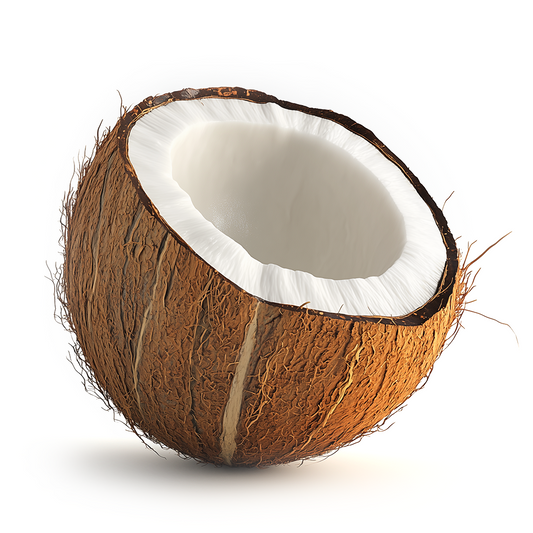
Coconut is a creamy, milky and woody note, evocative of holidays in the sun and tropical islands to many. It can be pushed towards coconut cream, gourmand coconut (in food) or a tropical piña colada direction. Coconut is not extractable for perfumery, however there are synthetic raw materials which can be used to create a coconut effect, which we will outline below.
Aldehyde C18 is the traditional coconut workhorse: It is powerful and gives the recognisable piña colada coconut note that many accords are built around. This one works like a special effect, modifying compositions, so don’t write it off based on its smell when pure alone. Methyl laitone is a creamy, woody material with a clear coconut character, useful for filling out the body and as an alternative to the more party-like un-seriousness of aldehyde C18. Bicyclononalactone is more solid and woody but remains in coconut olfactive territory, and can be used to represent the woody coconut husk, whereas milk lactone works well as a decoration when you want to push the coconut cream direction, softening edges and making the accord read more milky without becoming sugary. Coconut pairs naturally with white florals, creamy woods (like sandalwood) and soft musks. We like the accords between coconut and both banana and orris.