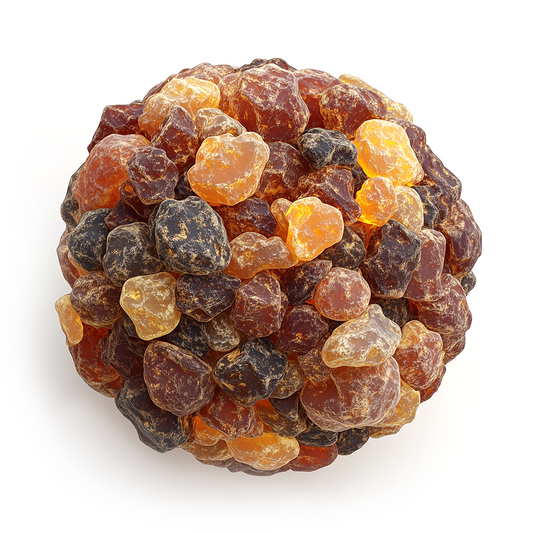
Incense ties into the origins of perfumery. Incense is a nebulous term used to describe “perfumes” which have been burned for their pleasant fragrance since thousands of years ago. Incense usually consists of gums, resins, herbs, woods, spices and other aromatic materials. It follows that incense is hard to pin down into a single accord given that it can be constructed in near infinite ways. Within incense, there are particularly well known archetypes such as Church incense, Arabian incense and Nag Champa, although the term means many different things to different cultures and people.
Church incense is traditionally Frankincense (also known as Olibanum) with optional other additions, for example rose in some Greek orthodox churches. Octyl acetate is a single molecule responsible for the pure, clean smelling heart of frankincense and worth considering in modern compositions where space is limited or a minimal impression is preferred. Arabian incense is often built around agarwood - it’s dark, woody and smoky. An Oud base like Black Agar Givco 215/2 is a cost effective reconstruction and the simplest way to build this note into your incense accord. Nag Champa, which is of Indian origin, is composed of sandalwood (replaceable by synthetics like bacdanol) and white florals like magnolia (which can be sketched with magnolan), frangipani or jasmine. Incense over the world frequently features balsamic materials like peru balsam, spices like cinnamon (cinnamyl alcohol is a cost effective way to introduce a cinnamon note), florals like rose and vanilla for sweetness (usually replaced by vanillin in perfume compositions). There really are limitless options with incense, so we recommend letting your own nose and creative inspiration guide you.