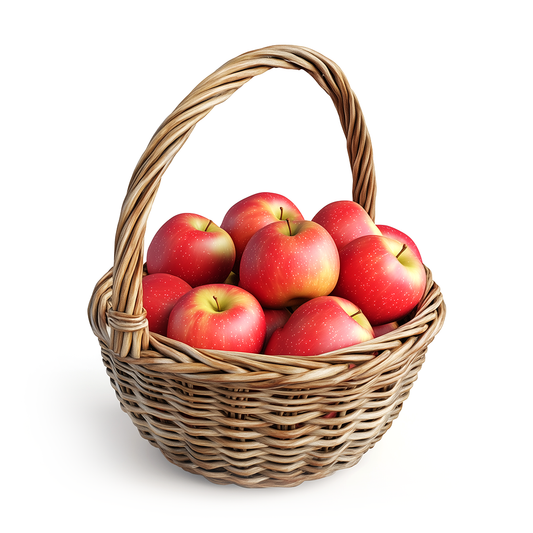
Apples are a common fruit in the western hemisphere which can be used in a number of ways in perfumery to different effect - from autumnal cider apples to tart fresh green apples. There’s no natural apple extract usable in perfumery so it must be built as an accord. The master perfumers at Robertet created one such interpretation, their Apple Essence (for Perfumer’s Apprentice in the USA - which we now stock), using natural isolates only, making it the go-to easy way to add an apple note for natural-only perfumes.
Master perfumer Jean-Claude Ellena splits apples into 3 baskets. All sit on a base of Fructone, which gives the impression of the natural fructose sugars found inside of apples. Firstly, for green apples he suggests adding benzyl acetate and cis-3-hexenol. For yellow apples, use benzyl acetate and hexyl acetate instead. Finally, for red apples, add hexyl acetate and allyl hexanoate to the fructone base. Aside from Jean-Claude Ellena’s suggestions, there are other materials worth mentioning which are useful when constructing the smell of apples. For a minimal apple top note which can open a perfume without muddying it, manzanate (named after the word manzana, meaning apple in Spanish) can be used - it’s also useful generally in apple accords to provide juiciness. Verdox is a subtler apple top note which fits seamlessly into a wide array of compositions. For a cider apple, look towards beta-damascone (and ethyl safranate to push the aforementioned beyond its IFRA limit). For a candied apple, look towards apple crotonate. Finally, for crisp green apple fresh, we recommend Triplal.